The upper zone of the wine cellar drifted warm through the afternoon. He found the condenser clogged and one fan turning slowly, cleaned the coil and replaced the fan. It holds both zones now through the hottest hours.
Wine storage
Viking wine cellar repair
Undercounter and full-height wine storage. Temperature stability, dual-zone faults, condenser airflow in tight cabinets, door seals, and sealed-system diagnosis.
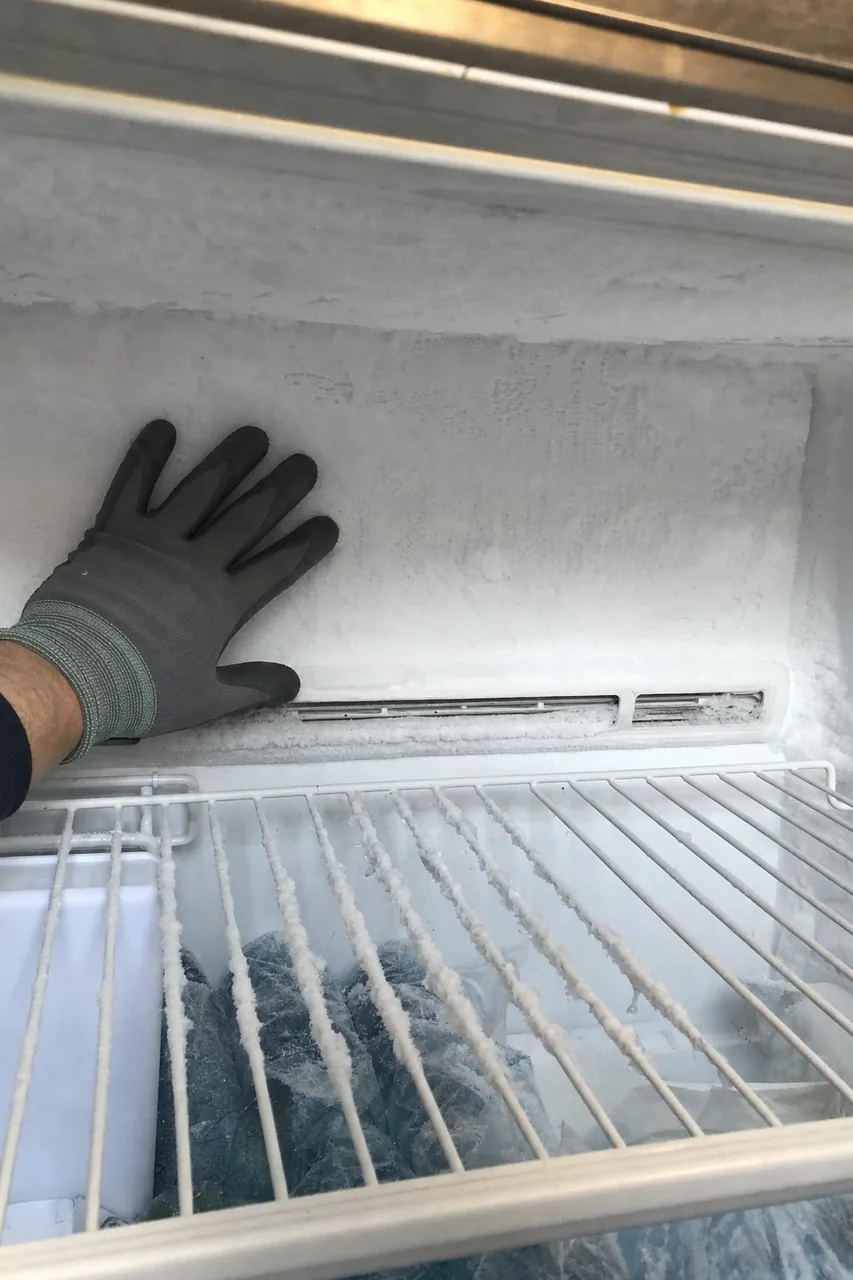
A cabinet that cannot hold a steady temperature shows it here first, on the wall behind the shelves, long before the display says so.
Symptoms
What you are seeing, and what it usually is
Described from the owner's side. No invented error codes. Where the cause is not certain, what gets checked is listed rather than guessed at.
| Observed | Usually | The work |
|---|---|---|
| Upper zone holds, lower zone drifts warm | Damper, zone fan or sensor fault. A dual-zone cabinet shares one refrigeration circuit and splits it, so a single zone failing is rarely a sealed-system problem. | Check the zone fan and damper travel, read both sensors, replace the failed component. |
| Unit runs constantly and never reaches setpoint | Blocked condenser or no airflow through the toe grille. Undercounter units are built into cabinetry and installers block the vent path more often than not. | Clean the condenser, verify clearance at the grille, confirm the cabinet opening matches the ventilation requirement before considering refrigerant. |
| Cabinet cools but the interior is damp and labels are lifting | Door seal or a drain issue. Humidity control depends on a door that closes properly. | Replace the gasket, reset the door, clear the evaporator drain. |
| Compressor short-cycling | Overheating from restricted airflow, a failed start component, or a control fault. Restricted airflow first, always. | Clear airflow, test the start relay and overload, check control output before touching the sealed system. |
| Interior lights dead or flickering | LED strip or driver failure. On glass-door units the driver runs warm and fails before the LEDs do. | Test the driver output, replace the driver or strip. |
| Frost building on the rear wall | Door not sealing, or a defrost fault letting humid air condense and freeze. Florida humidity makes this worse than the manual assumes. | Check the seal all round, verify the defrost cycle and drain, correct the door alignment. |
Price Bands
What does a wine cellars repair cost?
Parts and labour together, in the bands these jobs land in. The $80 diagnostic comes off the bill when you approve the work, and the firm figure is written down after the fault is proved.
| Work | Typical range |
|---|---|
| Diagnostic visit | $80 |
| Refrigeration fan or defrost system | $240–$640 |
| Compressor or sealed-system repair | $980–$2,470 |
| Control board or touch panel | $390–$930 |
Detail
How we approach it
Most wine cellar faults are installation faults
Before anything else, the airflow. An undercounter wine cellar rejects heat forward through the toe grille. It has to draw cool room air in and push warm air out through the same face, and it needs an unobstructed path to do it.
Cabinetmakers build beautiful islands that seal that path shut. Kick panels get fitted flush. Decorative grilles get added with 20 percent free area. A stone overhang traps the exhaust and the unit re-breathes its own warm air. The result is a compressor that runs continuously, a cabinet that never quite reaches setpoint, and an owner who has been told they need a new sealed system.
We measure the opening and the discharge temperature before we get the gauges out. In a meaningful share of calls the appliance is fine and the joinery is the problem. We will tell you that even though there is no part in it for us.
Genuine faults
Zone control. Dual-zone cabinets split one refrigeration circuit with a damper and a zone fan. When one zone drifts and the other holds, the fault is almost always in that splitting mechanism, not in the compressor.
Door seal and humidity. This is a subtropical climate. Cabinet humidity is managed by keeping outside air out. A hardened gasket or a door that has settled lets warm humid air in, which condenses on the coldest surface, which is the rear wall. Then you get frost inside and lifting labels on the bottles.
Start components. A compressor that hums and cuts out is usually a start relay or an overload, not a dead compressor. Those are inexpensive parts and worth testing before anyone writes the unit off.
Sealed system. Real, and it happens. Opening a sealed refrigeration system requires EPA Section 608 certification, which is federal law, not a manufacturer program. Our refrigeration techs hold it. We diagnose on the first visit and return with recovery and charging equipment on the second.
Storms
About 68 thunderstorm days a year in this metro. Wine storage is one of the appliances most likely to be quietly killed by a power event, because nobody opens it daily and nobody notices the setpoint has been lost until the display is dead. If your cellar went out in a week with heavy afternoon storms, we check the board and the supply first.
What a setpoint is worth
People agonise over the number and ignore the stability. For long-term storage, a cabinet holding steady at two degrees off its setpoint is doing less harm than one that swings six degrees between morning and evening.
So when we assess a wine cellar we log it over at least twenty-four hours rather than reading the display. That curve tells us whether the fault is a control problem, a load problem or an airflow problem, and it separates a cabinet that is genuinely failing from one that is simply set wrong.
It also shows door-opening behaviour. A cellar in a busy kitchen opened twenty times an evening has a duty cycle nothing like one in a dining room, and the compressor run time that looks alarming on paper is sometimes just how the appliance is being used.
Terms
$80 flat diagnostic, credited toward the repair. Written estimate before work. 90 days labor, 365 days parts, genuine OEM parts. Independent shop, no manufacturer contract.
Job Data
Scope and terms for this appliance
| Item | Detail |
|---|---|
| Types serviced | Undercounter and full-height, single and dual zone |
| Sealed system | Yes, EPA Section 608 |
| Diagnostic | $80 |
| Labor warranty | 90 days |
| Parts warranty | 365 days |
| Common root cause | Restricted condenser airflow |
EPA Section 608
Sealed-system work
Opening a sealed refrigeration system and handling refrigerant requires EPA Section 608 certification under federal law. Our refrigeration techs hold it — a federal credential, not a manufacturer certification of any kind.
A sealed-system fault gets proved before anything is opened. Condenser condition, airflow, fans, dampers, defrost and door seals are ruled out first: every one of them looks like a refrigerant problem on a work order.
Questions
Asked on most of these calls
My wine cellar is built into an island with no visible vent. Is that a problem?
Almost certainly. These units reject heat through a front grille and need a clear path. If the cabinetry blocks it, the unit will run permanently and still drift warm. We measure the opening and tell you what has to change.
Is a sealed-system repair worth it on an undercounter unit?
Sometimes. We give you the number and the odds. Opening a sealed system requires EPA Section 608 certification, which our refrigeration techs hold, and it is a two-visit job.
Two degrees of drift. Does it matter?
For storage over years, stability matters more than the exact number. A cabinet that swings six degrees through the day is doing more harm than one holding steady two degrees off setpoint.
Related Appliances
Often the same call
$80 flat diagnostic, credited toward the repair. The diagnostic covers the visit, not the machine, so say so when you book if two are down.
Built-in and freestanding refrigeration. Sealed-system faults, ice maker fill valves, defrost and fan faults, condenser corrosion on the coast, and door hardware.
Panel-ready and stainless dishwashers. Drain and fill faults, heater and relay failures, blocked spray arms, door spring and cable wear, and boards after power events.
Where This Comes Up
Areas where we see this most
Ranked by how far this appliance's failure pattern overlaps the housing stock, the exposure and the equipment age there. 40 miles by road of Fruit Cove, St. Johns County.
Reading
Background on this fault
Customer Comments
What customers said after a wine cellars visit
4.8 out of 5, across 90 customer reviews. Every one is a single visit, in the words of the person whose kitchen it happened in.
Ours short cycled and the display kept resetting itself. He found a failing control board and, before ordering it, checked the supply for the voltage drop that had likely killed the first one. Both dealt with.
Ours was cycling constantly and never settling. He found the thermistor reading high, replaced it, and then sat and watched three full cycles through before he would say the job was done.
Next Step
Book a diagnostic
Give us the model number and what it is doing. We quote in writing before anything comes apart.
- $80 diagnostic, credited
- 90-day labor
- 365-day parts
- Mon-Fri 8am-6pm. Sat 9am-4pm. Closed Sunday.